


“Todos fueron llenos del Espíritu Santo y comenzaron a hablar en diferentes lenguas, según el Espíritu les concedía expresarse.” (Hechos 2:4)
“All of them were filled with the Holy Spirit and began to speak in other tongues as the Spirit enabled them.” (Acts 2:4)
Here are some preliminary things to consider about interacting with other cultures for the first time. No matter how much we study, we are never the expert. Every culture is unique. But also, every culture has different subcultures. For example, people talk differently, move differently, and value different things in cities versus rural America. Neither of these populations is any more important than the other. They are just different subcultures of American culture. Other cultures are the same way.
Here’s how to read the room when adapting to another culture, be it in Latin America, or in a Hispanic community in the US.
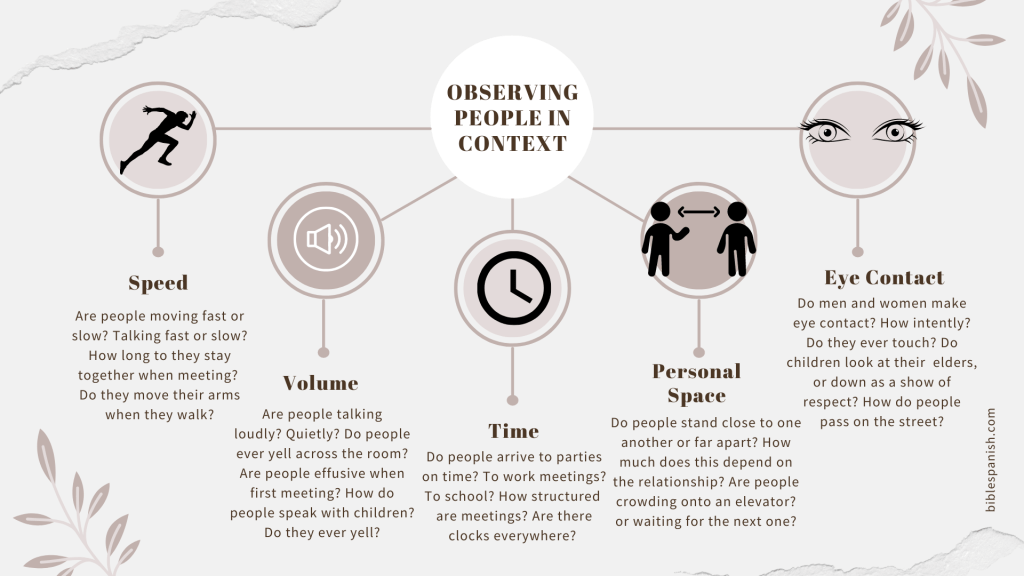
It might seem rude to watch people so closely for too long. Here are some ways to learn behind-the-scenes:
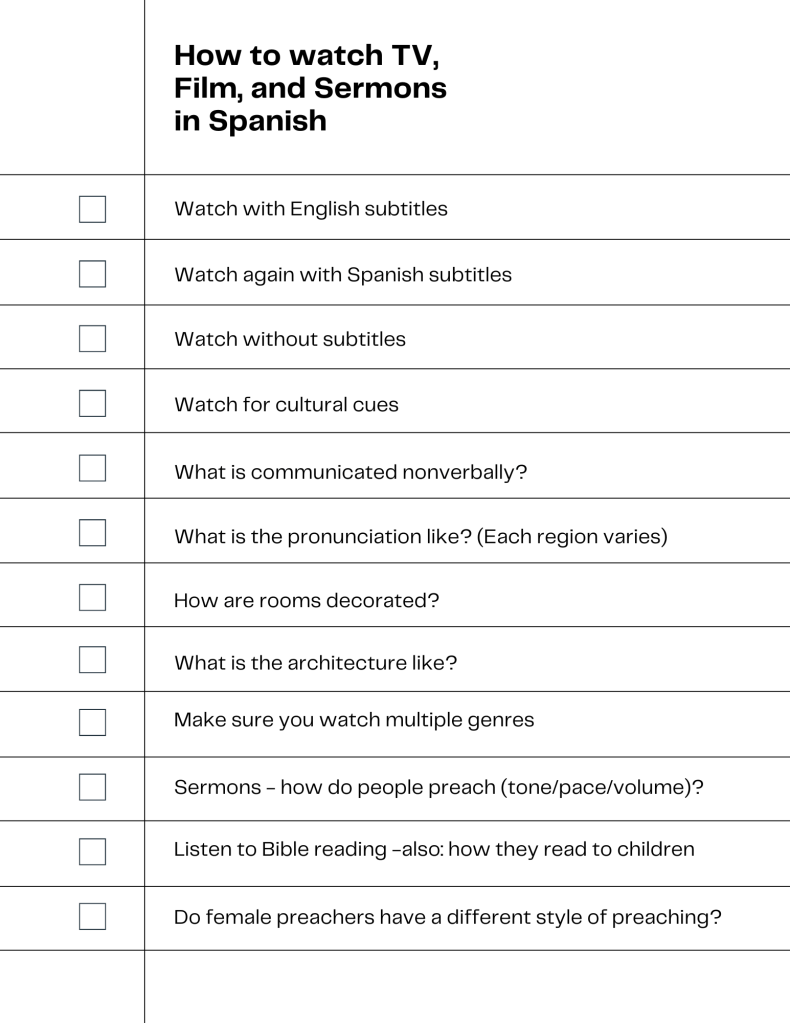
A lot of communication requires people to know where their audience is coming from and being able to communicate where you’re coming from to your audience. You will find a lot of people have preconceived ideas about who you are depending on where you are from. Sometimes they are right, and sometimes they are wrong. In this essay, Anton Deik writes about how he, as a Palestinian living in Bolivia, found resonance in the speech offered by Ruth Padilla DeBorst at the Lausanne IV in South Korea (in Spanish here).
Here’s how to learn respectfully, without making assumptions ourselves. Remember: even though we are looking at another culture, we are not from that culture, and what we see people doing will mean something different to us than it means to the people doing it. Humility and patience and receptivity are needed. Generosity of spirit.
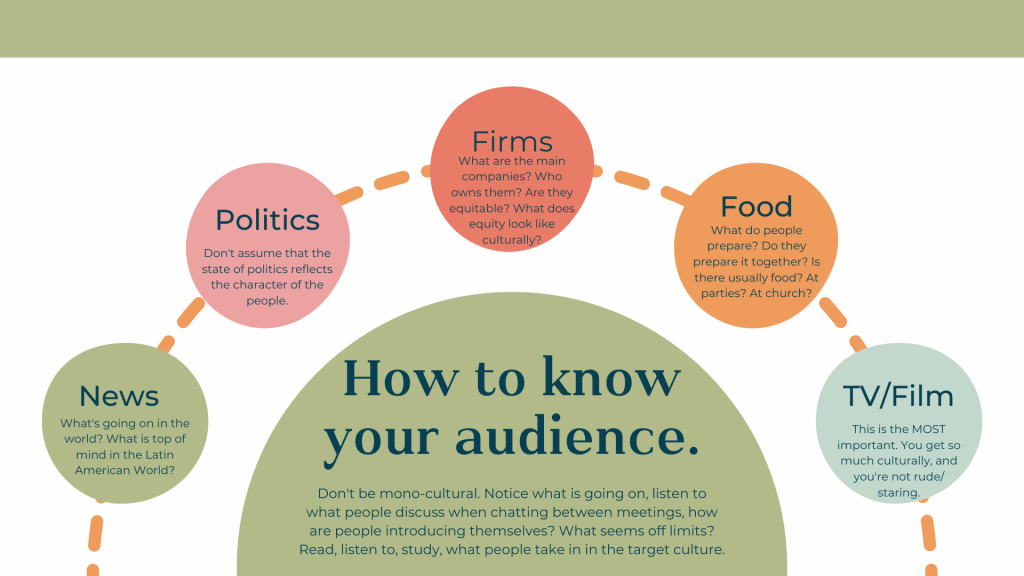
Finally, how we communicate in writing can make a powerful first impression. Sometimes our first impressions we make with our communications in writing take years to overcome once we have a face-to-face relationship. Let’s start off on the right foot. This particular infographic is for writing in English to speakers of Spanish from Latin America…

People who use they/them pronouns and those who care about them will like this handout on inclusive Spanish.
 Biblespanish.com